


Why Your Car Shakes When Braking
If your car starts shaking when you hit the brakes, your first thought probably isn’t, “Time for new brake pads.” It’s more like, “Is this safe? Is my wheel about to fall off? And how much is this going to cost me?”
Brake vibration is one of those problems that makes people uneasy for good reason. Your braking system is directly tied to your safety. The good news? In most cases, the cause is common and fixable. The key is diagnosing it correctly instead of guessing and replacing parts until something works.
First: Is It Safe to Drive?
Use this quick checklist. You should avoid driving if:
- The steering wheel shakes violently
- The brake pedal pulses hard or sinks to the floor
- You hear grinding metal
- The car pulls sharply to one side
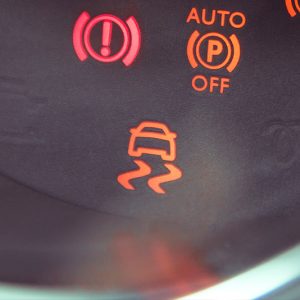
- A brake warning light is on
If your car feels like it is actively arguing with you when you try to stop, that is your cue. That said, it may be OK to drive short distances if:
- The vibration is mild
- There are no warning lights
- Braking power feels normal
- There are no grinding noises
If you’re unsure, err on the side of caution. Brakes are not the place to test your luck.
The Usual Suspects
Here are the most common reasons a car shakes when braking.
- Warped brake rotors
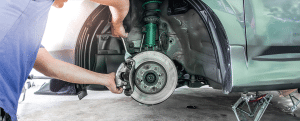
This is the most common cause. Brake rotors are the metal discs your brake pads clamp down on. Over time, heat can cause them to wear unevenly. When that happens, the brake pads grab inconsistently and you feel it through the steering wheel or pedal.
Common signs:
- Steering wheel shakes when braking at higher speeds
- Pulsing feeling in the brake pedal
- Vibration gets worse the harder you brake
Think of it like a slightly wobbly record; with every rotation, you feel the high spot.
- Worn brake pads
Brake pads wear down over time. If they wear unevenly or get too thin, they can cause shaking or pulsing.
Common signs:
- Squealing before vibration starts
- Vibration that develops gradually
- Reduced stopping power
Pads are meant to wear. Ignoring them until they sound like a horror movie soundtrack is optional, but not recommended.
- Sticking brake caliper
Calipers press the pads against the rotors. If one sticks, it may apply uneven pressure or not release properly.
Common signs:
- Car pulls to one side while braking
- Burning smell after driving
- One wheel feels hotter than the others
A stuck caliper is basically one brake doing all the work while the others are on break (pun intended).
- Loose suspension or steering components
Sometimes the brakes are innocent. Worn tie rods, ball joints or control arm components can cause vibration that shows up most noticeably during braking.
Common signs:
- Clunking over bumps
- Loose or wandering steering
- Shaking that happens even without braking
If the steering already feels vague, braking just makes the problem louder.
- Alignment problems
If your wheels are out of alignment, braking can exaggerate the issue.
Common signs:
- Uneven tire wear
- Car drifts while driving straight
- Steering wheel is off-center
Alignment issues rarely fix themselves, unfortunately.
- Tire issues
Unbalanced tires, separated tread or uneven wear can cause vibration that feels worse when braking.
Common signs:
- Shaking at highway speeds
- Visible tire wear patterns
- Vibration that does not change much when braking
Sometimes the shake you blame on brakes is actually your tires waving for attention.
If It Feels Like This, It’s Probably That
Here’s a quick,plain-English guide:
- Steering wheel shakes mostly at higher speeds when braking — it’s likely warped rotors
- Brake pedal pulses under your foot — uneven rotors
- Car pulls left or right when braking — sticking caliper or suspension issue
- Grinding noise with vibration — severely worn pads
- Shaking even when you’re not braking — tire or suspension problem
This list isn’t a substitute for an inspection, of course, but it at least gives you a starting point so you’re not walking in completely blind.
Why Proper Diagnosis Matters
It’s easy to assume that you just need new brake pads — but if the real problem is a caliper, suspension component or alignment issue, replacing pads alone won’t solve it. In fact, it may actually make things worse.
Make sure you’re working with trusted mechanics who don’t simply guess. They should inspect the system and explain what they find.
What We Check During a Brake Inspection
When you bring your vehicle in, your mechanic should look at:
- Brake pads and rotor condition
- Caliper operation
- Brake fluid level and condition
- Suspension and steering components
- Tire wear and balance
- Signs of heat damage or uneven wear
Your mechanic also should explain everything in plain language and walk you through your options.
Catching It Early Saves Money
Small brake issues tend to grow up into expensive ones if ignored. A slightly warped rotor can lead to premature pad wear; a sticking caliper can overheat and damage multiple components; and loose suspension parts can chew through tires faster than you think.
Addressing the problem early usually means:
- Lower repair costs
- Fewer parts replaced
- Less downtime
- More peace of mind
The Next Step
If your car shakes when braking, don’t ignore it — and don’t panic. Schedule a brake inspection with your mechanic to find out what’s happening, and to fix only what actually needs fixing. Because when it comes to your brakes, confidence should not be optional.




Comments